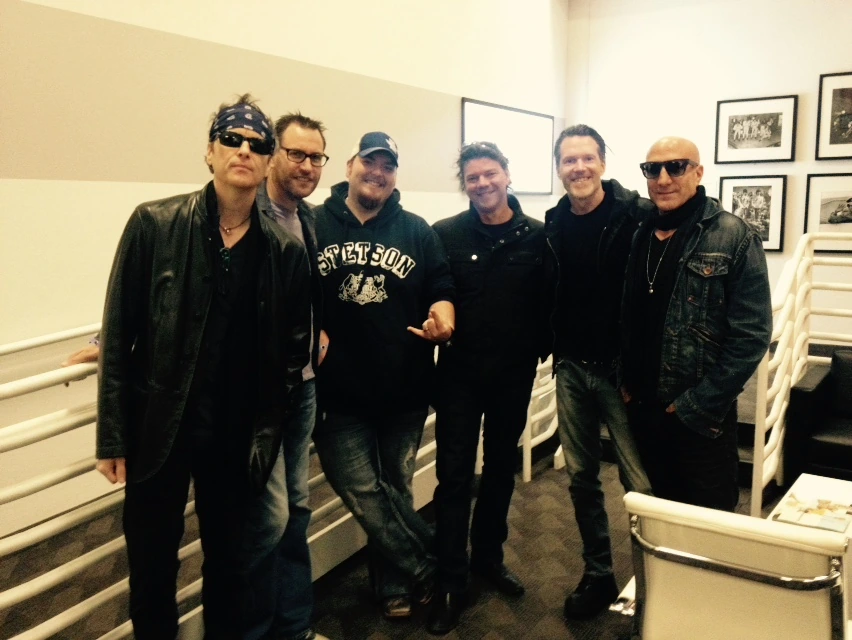
But a quick heads-up on disambiguation: searches for 'bodeans' can accidentally surface results for BoDeans Baking Group (a food company), Bodeans Dozer and Trackhoe Service LLC (a construction business), or even a person named Jeff Bodean, none of which have anything to do with the rock band. Business-data scrapers sometimes mix those revenue figures into search results, so treat any wildly inconsistent number you see with skepticism. Everything below is about the band.
The Direct Net Worth Estimate (and Why It Is a Range)
The BoDeans as a band entity do not file public financial statements, so any net worth figure is an estimate built from observable signals: touring income, streaming and catalog royalties, merchandise sales, and publishing rights. Based on those signals, a reasonable estimate for the band's combined financial footprint, weighted toward the primary songwriter and founder Kurt Neumann (who holds the most durable publishing interest), lands somewhere in the range of $2 million to $5 million. That is not a celebrity-headline number, but it is a realistic figure for a legacy American rock act that charted in the early 1990s, owns catalog with genuine long-tail royalty value, and is still actively touring in 2026.
The range is wide because a few variables are genuinely unknown. How the publishing rights to 'Closer to Free' are structured (whether Neumann and co-writer Sam Llanas retained their shares, or whether a publisher controls a majority of those rights) could move the estimate significantly in either direction. The same goes for whether Llanas, who departed the band, negotiated any ongoing royalty arrangement. Without confirmed deal structures, the best approach is to treat the midpoint, around $3 million to $3.5 million, as the most defensible single-point estimate while keeping the full range in mind.
Where the Money Actually Comes From
Touring: Still the Engine

For legacy artists like The BoDeans, live performance is the primary ongoing income driver. The band has been continuously active into 2026, with confirmed dates including a May 6 and May 8, 2026 appearance at The Vogel at Count Basie Center for the Arts, and a 40th anniversary touring push referenced in venue press materials. One booking-fee aggregator puts BoDeans concert fees in the $25,000 to $75,000 range per show, with an estimated mid-point around $40,000.
Even a conservative assumption of 20 to 30 tour dates per year at that range produces annual gross touring revenue of roughly $500,000 to $2. 25 million before agent fees, production costs, crew, and travel. Net touring income for a band at this level is typically 30 to 50 percent of gross, so real annual net from touring is more likely in the $150,000 to $600,000 range.
Kurt Neumann has spoken publicly about how critical touring is for artists at this career stage, which aligns with the band's visible commitment to the road.
Publishing Royalties: 'Closer to Free' Is the Anchor
'Closer to Free' peaked at number 16 on the US Billboard Hot 100 and reached number 1 in Canada following its re-release. Its use as the theme song for Party of Five from 1994 through 1999 gave it years of broadcast performance royalties and embedded it in the cultural consciousness of an entire generation, which is exactly the kind of placement that generates long-tail streaming and sync income decades later.
BoDeans' biggest hit "Closer to Free" was used as the theme song for Party of Five and peaked at No. 16 on the U.
S. Billboard Hot 100 in 1996. The song appears on 'Go Slow Down' (1993), the band's fifth studio album, which peaked at number 127 on the Billboard 200. Neumann and Llanas are credited as co-writers, meaning publishing royalties flow to whoever holds those rights, whether that is the songwriters directly, a music publisher, or some split of both.
A moderately successful catalog track with TV sync history can generate anywhere from a few thousand to tens of thousands of dollars per year in performance and mechanical royalties depending on streaming volume and re-licensing activity.
Streaming and Catalog Sales

The BoDeans released their most recent studio album, '4 the Last Time,' on June 24, 2022, which keeps them in the algorithm-friendly zone for streaming platform editorial consideration. Their back catalog, particularly anything featuring 'Closer to Free,' benefits from playlist placements, nostalgia cycles, and Party of Five-adjacent media moments. Streaming payouts are notoriously small on a per-play basis (roughly $0. 003 to $0.
005 per stream on most platforms), but a catalog song with strong recognition can accumulate meaningful annual totals if it lands on high-traffic playlists. Physical product is also still in market: CD listings on platforms like Merchbar confirm titles such as 'I Can't Stop' and 'American Made' are still commercially available, though CD sales are a minor income channel at this point.
Merchandise
Merchandise is a real but difficult-to-quantify income line for The BoDeans. At the touring level, bands typically earn 20 to 30 percent margins on merch sold at shows. For a legacy act playing mid-sized venues, annual merch revenue probably falls in the low tens of thousands of dollars rather than the six figures that arena acts see. It contributes to the total picture but is not a dominant wealth driver for a band at The BoDeans' scale.
Career Timeline and the Money Behind Each Phase

Understanding where The BoDeans' wealth comes from requires tracking how their career has moved through different earning phases. Here is the arc that matters for financial context:
| Period | What Happened | Financial Impact |
|---|
| 1983–1990 | Band forms in Waukesha, WI; early independent and Slash/Reprise Records deal; debut 'Love & Hope & Sex & Dreams' (1986) builds regional and critical following | Modest early advances and touring income; catalog foundation established |
| 1991–1993 | Major label output continues; 'Black and White' (1991) peaks at #105 Billboard 200; 'Go Slow Down' (1993) peaks at #127 but contains 'Closer to Free' | Chart presence, publishing rights accrued; 'Closer to Free' recorded |
| 1994–1996 | 'Closer to Free' peaks at #16 Hot 100 and becomes Party of Five theme; Canadian #1 on re-release; peak mainstream visibility | Largest royalty-generating period; broadcast performance royalties from TV placement; strongest label support |
| Late 1990s–2005 | Studio hiatus of roughly eight years described in press; reduced new-release income | Catalog royalties sustain; touring continues at lower intensity; no major new publishing rights created |
| 2006–2021 | Return to recording and releasing; multiple studio albums; continued touring | Diversified catalog; touring income resumes as primary driver; streaming era begins generating incremental royalties |
| 2022–2026 | '4 the Last Time' (June 2022) released; 40th anniversary touring push; active dates through May 2026 | Current touring income active; new album extends streaming presence; catalog remains monetizable |
How Net Worth Estimates Are Built (and Why They Vary)
Most net worth figures you find online for artists like The BoDeans are not calculated from verified financial records. They are modeled estimates that start with publicly available data points: chart history, known touring activity, genre-average royalty rates, and assumptions about career longevity. The problem is that those assumptions vary wildly between outlets. One site might assume the band earns top-of-range booking fees every night of the year; another might apply streaming royalty rates to an estimated stream count nobody has actually verified. The result is that estimates for the same artist can differ by a factor of two or three without either being demonstrably wrong.
For The BoDeans specifically, I could not find a single well-sourced, methodologically transparent net worth calculation from a mainstream financial outlet in research conducted for this article. The numbers that circulate are largely SEO-generated estimates with unclear inputs. That is not unusual for a legacy rock band that operates outside the celebrity-industrial complex, but it does mean the range I have presented here, $2 million to $5 million, should be read as an evidence-informed estimate rather than a confirmed figure. If you are comparing this to a different “net worth” query, see also boki 13 net worth as another related example of how estimates vary by source and assumptions.
Three variables would most significantly change that estimate if confirmed: the actual publishing ownership split for 'Closer to Free' (full songwriter retention would push the number up; a publisher owning a large share would push it down), the actual number and average fee of tour dates per year (more dates at higher fees push it up), and whether any catalog sale or sync deal has occurred recently (a one-time catalog sale to a music-rights investment firm, which has become common in the industry, would represent a significant liquidity event that most estimate sites would miss entirely).
How to Verify or Update This Estimate Today
If you want to stress-test this estimate or update it with fresh information, here are the most productive places to look:
- Tour date volume: Check platforms like Jambase, Songkick, or Bandsintown for the number of shows The BoDeans have booked in the current year. More dates at larger venues means more income. As of April 2026, they have confirmed dates running through at least May 2026.
- Venue size and ticket pricing: A quick check of venue capacities and average ticket prices for upcoming shows gives you a rough gross revenue ceiling per night. Multiply by estimated shows and apply a 30 to 50 percent net margin.
- Streaming performance: Search for The BoDeans on Spotify and check monthly listener counts. A band with 100,000-plus monthly listeners is generating meaningful streaming income; below 50,000 suggests catalog royalties are modest.
- Publishing ownership signals: Search the ASCAP and BMI databases for 'Closer to Free' to see registered publisher and writer credits. This is publicly searchable and gives you direct evidence of who holds royalty rights.
- Catalog sale activity: Search the band's name plus terms like 'catalog sale,' 'publishing deal,' or 'rights acquisition' in music industry trade outlets such as Billboard, Variety, or Music Business Worldwide. A single catalog deal can be worth years of touring income.
- New releases: Any new studio album or EP extends streaming income and often correlates with a touring push, both of which would push the estimate upward.
Band vs. Member: Who Are We Estimating?
If your search for 'bodeans net worth' was really about a specific person rather than the band as a whole, the most financially relevant individual is Kurt Neumann, the founder, lead vocalist, and primary songwriter who has been with the band since 1983. If you were actually searching for Bekim Veseli net worth instead of the band, focus on credible biographical and financial sources rather than SEO estimates.
If you are specifically looking for Bolaji Badejo net worth, the best approach is to find a reputable source that explains how the estimate was calculated. Bolaji Badejo net worth research can be done by checking reputable sources and how they calculated the figure. Because Neumann co-wrote 'Closer to Free' with Sam Llanas, he is the person most directly connected to the publishing royalties that represent the band's most durable income stream. His personal net worth, if estimated separately, would likely represent the largest share of whatever collective band-level wealth exists.
Sam Llanas, the co-founder and co-songwriter who has since departed the band, would also have a claim to publishing royalties from the songs he co-wrote, including 'Closer to Free.' His current net worth situation depends heavily on whether he retained his writer's share after leaving, which is not publicly confirmed. Current BoDeans members listed on the band's Wikipedia page include Stefano Intelisano, James Hertless, Brian Ferguson, Kenny Aronoff, Glenn Fukunaga, and Bukka Allen. These members earn from touring and performance but are unlikely to hold the same depth of catalog publishing rights as Neumann and Llanas unless they have written material on later albums.
One practical note for researchers: if you have stumbled across a 'Jeff Bodean net worth' page in your search, that refers to a completely different individual with no connection to the band. The name similarity is a genuine search confusion risk.
The Bottom Line
The BoDeans are a working legacy rock band with real, documentable income streams: active touring into 2026, a catalog anchored by a genuine top-20 hit with long-tail sync value, publishing rights from nearly four decades of songwriting, and a recent studio album keeping them relevant on streaming platforms.
MusicRow reports that ASCAP revamped its ACE repertory database to let users view share information, which is relevant because repertory databases can help verify publishing and rights splits publishing rights from nearly four decades of songwriting. A combined estimate of $2 million to $5 million, with the most defensible midpoint around $3 million to $3. 5 million, reflects what the evidence supports without overstating what cannot be verified.
If you want a sharper number, the ASCAP/BMI publisher search and current touring footprint are the two fastest things to check. Everything else, streaming counts, venue sizes, and new releases, flows from those two anchors.