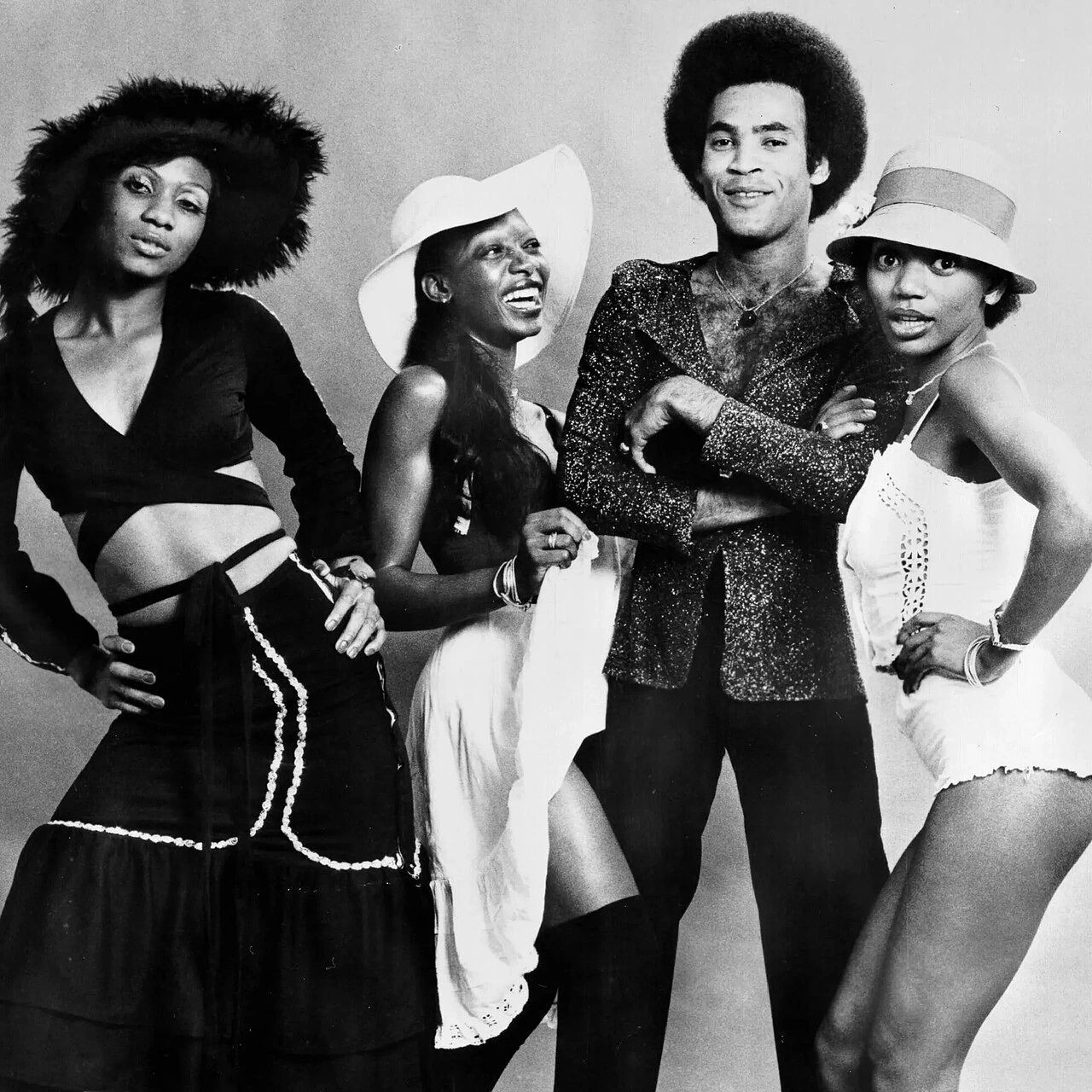
If you are searching for a quick lookup number, treat the group's collective performer-side net worth as roughly $10 to $20 million, acknowledge that the rights-holder side added dramatically more wealth (now part of Farian's estate and Sony's catalogue holdings), and use that framing as your baseline. Everything below explains exactly how we get there.
How we estimate net worth for artists like this
Net worth estimation for legacy acts is part detective work and part financial modelling. For a group like Boney M, there is no public balance sheet, no SEC filing, and no mandatory disclosure. What we do instead is build an estimate from the outside in, layering multiple data types on top of each other and flagging where we are extrapolating versus where we have solid anchoring data.
The main inputs we use are: verified or credibly reported personal wealth statements from interviews and estate coverage; publishing and royalty logic derived from chart performance, catalogue scale, and licensing activity; tour revenue estimates based on documented concert history and venue sizes; streaming-era analytics from YouTube and DSPs used as directional proxies, not authoritative figures; and legal/court records where disputes have surfaced (which in Boney M's case is significant, as explained later).
Tools like SongValue provide estimated annual royalty valuations for individual albums, which gives a useful order-of-magnitude check. When a single Boney M album shows estimated annual music royalties in the range of $3. 4 million and a catalogue valuation of roughly $27. 5 million for that one title alone, it anchors the publishing rights discussion in real numbers, even if the actual splits mean performers see only a fraction of that.
Where data is incomplete, we make conservative assumptions and say so. We do not round up to make the number look impressive, and we do not echo inflated celebrity net worth figures without flagging the methodology behind them. This approach is similar to how you'd evaluate Badfinger's financial story, another legacy act where the distance between commercial success and personal wealth was enormous and often misunderstood.
Income breakdown: royalties, tours, recordings, and publishing

Publishing and composition royalties
This is where the real money lives, and it largely did not belong to the performers. Frank Farian co-wrote most of Boney M's biggest hits. "Rasputin" is credited to Farian, George Reyam, and Fred Jay. "Daddy Cool" is credited to Farian and Reyam. Copyright documentation via GEMA, EasySong, and publisher records shows that the rights to these compositions run through Farian-linked publishing entities and Sony/ATV Tunes LLC. That means every time "Rasputin" lands in a TikTok video, a film sync, a streaming playlist, or a karaoke download, the composition royalty flows primarily to those publisher entities, not to the vocalists who performed the tracks.
Liz Mitchell explained in a 2016 interview that a performer's royalty share from a hit single can be as small as a seventh of one percent after the record company, management, and other participants take their cuts. On a catalogue selling 1.2 million-plus copies, that fraction adds up over decades, but it is a very different story than the songwriter and publisher share. For the performers, publishing royalties are largely not on the table unless they wrote or co-wrote the material.
Master recording royalties and streaming income

The master recordings went through multiple reissue cycles. BMG-Ariola (now Sony Music) oversaw remixes, reissues, and repackaged compilations across the 1980s, 1990s, and 2000s, which extended the mechanical and performance royalty life of the catalogue well beyond the original 1970s vinyl era. In the streaming era, those masters continue generating income. blank" rel="noopener noreferrer">Boney M has an active YouTube presence through its official channel, and while YouTube analytics tools are not authoritative royalty statements, they function as a useful directional signal for ongoing digital revenue. Master royalties from streaming typically split between the label (Sony) and any contractual backend participation the original artists negotiated, which for 1970s acts was often minimal.
Live touring has been the most direct and controllable income stream for the Boney M performers in the decades since the group's commercial peak. Concert archives show documented activity continuing through at least 2024, and as of 2026, Maizie Williams is headlining the "Boney M Feat. Maizie Williams: The Final Curtain Tour," with performances of "Rasputin" and "Daddy Cool" listed in the tour repertoire. Nostalgia circuit touring for a brand with Boney M's recognition level commands solid fees, typically in the range of $25,000 to $150,000 per performance depending on venue, market, and billing, though the name rights disputes (covered below) have historically complicated who can actually book and profit from the Boney M name.
Licensing and synchronization

"Rasputin" experienced a massive synchronization and viral revival in the early 2020s, driven largely by social media. Sync licenses for film, TV, and advertising can pay anywhere from a few thousand dollars for small placements to six figures or more for major campaigns. The viral attention on "Rasputin" in particular likely generated meaningful sync and streaming income, though again, the majority of that routes through the publishing and master rights holders, not directly to the performing members. PRS for Music explains that licensing and administration for online royalties can involve major publishers and rights holders, including Sony Music Publishing/ATV Group.
Career timeline and the wealth accumulation story
Boney M's commercial peak ran roughly from 1976 to 1984. The group released a string of globally successful singles and albums, with "Rivers of Babylon," "Rasputin," "Daddy Cool," "Brown Girl in the Ring," and "Mary's Boy Child" among the biggest sellers. At their height, Boney M was one of the best-selling acts in Europe and had significant reach in markets from Australia to South Africa.
The group effectively split in 1986. Bobby Farrell, the male performer most associated with the group's image, had reportedly signed over all his rights to the earnings of Boney M to Farian for 100,000 German marks at some point, and was described as financially impoverished by the time the group dissolved. Farrell died in December 2010 in St. Petersburg, Russia. His financial story is a stark example of how commercial success at the group level did not translate to personal wealth for every member.
Post-split, the surviving members continued performing in various configurations under contested versions of the Boney M name. Liz Mitchell has led one touring version; Maizie Williams another. The ongoing legal disputes over the name created a fractured live touring landscape in the 1990s and 2000s. Despite that complexity, the nostalgia demand for Boney M's music has remained strong, and performers who stayed active in live markets accumulated steady if unspectacular income through the 2000s and 2010s.
This pattern of sustained but modest performer-side income from a legacy catalogue is something you see repeatedly in the disco era, which is worth keeping in mind if you are also exploring how acts like Birdy built a more modern royalty structure versus how 1970s acts were contractually positioned.
Spending, taxes, and liabilities that affect real net worth
Gross earnings and net worth are two entirely different things, and this gap is especially wide for legacy music acts. Here are the main factors that compress what performers actually take home:
- Management and agency fees: Typically 15 to 20 percent of touring income goes to management, with booking agents taking another 10 to 15 percent on top of that.
- Production costs: Live touring involves significant upfront costs for staging, sound, travel, crew, and logistics that are deducted before any performer profit is calculated.
- Taxes across multiple jurisdictions: Boney M performed globally, and international touring income is subject to withholding taxes in each territory, on top of home country income tax obligations.
- Legal costs: The 'more than two decades of legal disputes' over the Boney M name, combined with Maizie Williams' court case against Farian and Sony/BMG, represent real financial drains on the performer side.
- Rights sign-overs and unfavorable contracts: Bobby Farrell's reported transfer of his rights to Farian is an extreme example, but unfavorable original recording contracts from the 1970s would have long-term structural impacts on royalty income for all performers.
- Lifestyle and cost of living: No documented evidence of major extravagance, but long-term performers maintaining homes, families, and professional infrastructure across decades carry ongoing costs.
The net result is that even a performer who earned several million dollars in gross touring and royalty income over four decades could have a current net worth significantly below what the raw earnings figures suggest. This is why we apply a meaningful discount when converting estimated gross career earnings into a net worth range. It is also why comparing Boney M's situation to a rights-owner like Frank Farian, whose $200 million estate reflects decades of compound publishing income on a major catalogue, is essentially an apples-to-oranges comparison.

A few recurring problems come up whenever you search Boney M net worth, and it is worth naming them directly so you can filter out the noise.
First, many sites conflate the group's commercial success (total record sales estimated at over 150 million worldwide) with personal performer wealth. Record sales revenue at that scale might imply hundreds of millions of dollars in gross revenue, but after the label takes its share, the producer takes his cut, songwriters receive their publishing royalties, and management and other expenses are deducted, the performing members receive a fraction. Headline figures like "Boney M net worth: $50 million" almost certainly reflect either the full commercial output of the brand or a misattribution of Farian's estate value to the group collectively.
Second, there is persistent confusion about which entity "Boney M" refers to when the name appears in a net worth search. Is it Frank Farian as the rights holder? Liz Mitchell as the primary vocalist? Maizie Williams as the current touring lead? Bobby Farrell's estate? Each of these would produce a dramatically different number. For reference, if you look at how a similar name-confusion problem plays out in other artist wealth profiles, it helps to think through each individual separately before combining them, which is how this site approaches profiles like Boney James's net worth, a totally different artist who gets swept into Boney M searches surprisingly often.
Third, the multiple active touring versions of Boney M (sometimes as many as three simultaneous "Boney M" acts touring in different markets) mean that any single touring revenue figure is split across competing entities, each with different legal standing and different income streams. This fragmentation further complicates any aggregate net worth estimate.
For a deeper look at the estate-level picture specifically, the article on Boney M net worth at death covers the Frank Farian angle in more detail and gives you context for separating what passed to the estate from what the performers hold independently.
How to check reliability and find updated numbers
Here is the practical process for evaluating any Boney M net worth figure you encounter online, whether on this site or elsewhere:
- Identify who the number refers to: Is it the group collectively, Frank Farian's estate, Liz Mitchell personally, or Maizie Williams? A reputable source will specify this clearly.
- Check the methodology: Does the site explain whether the figure is based on royalty logic, self-reported wealth, estate filings, or something else? If there is no methodology, treat the figure as speculative.
- Cross-reference the rights structure: Given that most Boney M composition and master rights flowed through Farian-linked publishing entities and Sony, any large per-member figure needs to explain where that wealth came from if it was not from rights ownership.
- Look for recency signals: Touring activity, new sync placements, streaming milestone reporting, or legal settlements can all move the number. The 2026 Final Curtain Tour, for example, represents a current income event worth factoring in.
- Apply a healthy discount to inflated ranges: When you see a figure that seems designed to impress rather than inform, cut it by 40 to 60 percent as a starting point and see if the residual is still defensible given the known facts.
- Use multiple reference points: A single net worth site is not a definitive source. Cross-checking against estate reporting, music industry publications, and credible interviews gives you a much more defensible range.
When comparing Boney M's profile to other artists on this site, it is also useful to look at how wealth accumulates differently depending on the artist's role. A session musician or pure performer will look very different from a producer-songwriter who retains publishing rights, in the same way that Shon Boney's wealth profile or Stan Boney's profile each reflect entirely different wealth-building paths depending on the nature of their respective careers. The underlying principle is the same: follow the rights, not just the fame.
One more practical note: YouTube-based analytics tools can show you directional data on digital audience scale and rough ad revenue estimates, which some net worth sites use as inputs. These are proxies, not authoritative royalty statements. They are worth consulting for order-of-magnitude checks but should never be the primary basis for a net worth estimate. For a group with Boney M's catalogue reach and ongoing streaming traction, those numbers will skew low relative to the actual licensing and performance royalty ecosystem.
Putting it all together: the most defensible Boney M estimate
Here is how we model the current picture as of April 2026, broken down by entity:
| Entity | Estimated Net Worth Range | Primary Wealth Source | Confidence Level |
|---|
| Frank Farian estate | $150M – $200M (pre-death) | Publishing rights, master ownership, production royalties | High (reported figure from multiple credible sources) |
| Liz Mitchell (performer) | $3M – $8M | Touring income, performer royalties, licensing participation | Medium (no public disclosure; estimate from career activity) |
| Maizie Williams (performer) | $2M – $6M | Ongoing touring under Boney M name, performer royalties | Medium (active touring provides current income anchor) |
| Bobby Farrell estate | Minimal / unknown | Rights signed over to Farian; reportedly impoverished pre-death | Low (limited verifiable estate data) |
| "Boney M" as a brand/catalogue | Rights held by Sony/Farian estate | Publishing, masters, sync licensing | N/A for personal net worth purposes |
The total performer-side net worth for surviving members is realistically in the $5 million to $14 million range in aggregate. The rights-holder side of the equation is an order of magnitude larger, but that wealth does not belong to the performers. Any net worth figure that blends these two without explaining the distinction is giving you a number that is technically defensible but practically misleading.
If you are researching this topic and want to go deeper on adjacent profiles, checking how wealth accumulates differently for rights holders versus performers in similar eras is worth your time. For example, looking at Mac Boney's financial profile or exploring Bay Crane's net worth can give you additional reference points for how industry structures shape personal wealth outcomes in music and entertainment. The pattern across nearly all of these cases is consistent: commercial success at the brand level and personal financial security at the performer level are two very different things, and the gap between them is usually where the most interesting financial story lives.