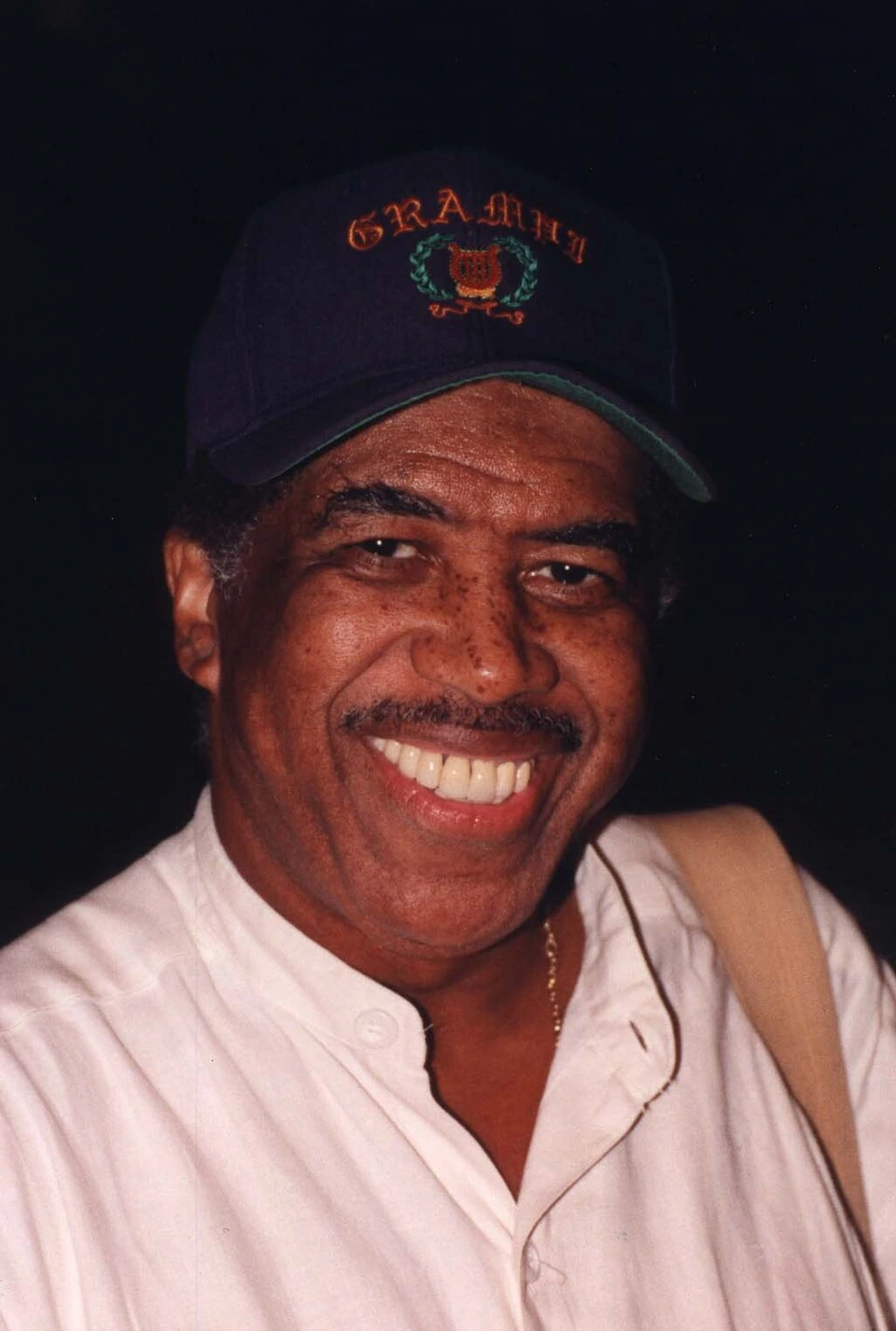
It's worth stating upfront that Ben E. King died in 2015, which means any "net worth in 2026" question is really asking about the value of his estate and the ongoing income it generates. That's a legitimate and interesting question, but it's different from a living artist's current net worth. The estate continues to collect royalties, and legal activity around those rights has continued well past his death.
How he built his wealth: career timeline and income sources

Ben E. King (born Benjamin Earl Nelson, September 28, 1938) had a career that unfolded in two distinct commercial peaks separated by decades. The first came in the early 1960s, when he charted as a solo artist after leaving The Drifters. "Stand by Me" hit #4 on the Billboard Hot 100 in June 1961, and "Spanish Harlem" became another major hit. Both songs generated publishing and performance royalties from day one, and those streams never really stopped.
The second peak arrived in 1986-1987, when "Stand by Me" was used as the title track for Rob Reiner's coming-of-age film. The re-release hit #9 on the Billboard Hot 100, introducing the song to an entirely new generation. For artists who already own or share publishing rights, a moment like that is a significant financial event: sync fees, renewed radio airplay, and a spike in performance royalties all hit at once. For King, this wasn't a comeback so much as a reminder that his catalog had legs no one could fully predict.
Through the 1990s and 2000s, King continued performing live and making occasional media appearances. He performed "Stand by Me" on the Late Show with David Letterman in 2007, toured the UK in 2013, and was still booking US concert dates in 2014, the year before his death. This sustained touring activity, even at a reduced pace, contributed real income in his later years. Concert fees for an artist of his stature and catalog depth were not trivial.
The big money drivers: record sales, royalties, publishing, and touring
"Stand by Me" is the financial anchor of Ben E. King's entire wealth story. BMI recognized it as the fourth most-performed song of the 20th century, logging approximately 7 million performances. TCM notes that BMI named “Stand by Me” the fourth most-performed song of the 20th century, and it highlights BMI’s recognition in a movie-related context [BMI recognized it as the fourth most-performed song of the 20th century](https://www.
tcm. com/articles/615419/pop-culture-101-stand-by-me). That number is a meaningful proxy for performance-right royalty generation over time. Every time the song plays on radio, in a film, in a TV commercial, or at a live venue, performance royalties accumulate.
For context, this is separate from the mechanical royalties generated every time the song is reproduced on a record, CD, or digital download, and separate again from streaming royalties, which became a growing revenue category in King's later years.
Publishing rights are where the real long-tail value lives. The publisher of record for "Stand by Me" has historically been listed as Trio Music, and the song's publishing income has been a point of legal contention (more on that below). If King or his estate held any portion of the publishing, that would significantly boost the overall estate value. If he had assigned or sold those rights at some point, the income stream would be correspondingly smaller. This is one of the core reasons why net worth estimates for catalog artists vary so widely.
Touring was a reliable but not enormous income source in King's later decades. Evidence of bookings shows performances in New York in March 2012, on Long Island in April 2013, and at least one documented concert in August 2013. These weren't stadium shows, but a veteran artist with a beloved catalog can command respectable fees at theaters and festivals. Combined with a modest but consistent recording royalty stream from decades of album sales and catalog licensing, touring added meaningful income without being the dominant driver.
Life and financial decisions that shaped his net worth

Several financial decisions across King's career had lasting effects on what his estate was worth in 2015 and beyond. Early in the music industry (1950s-60s), artists routinely signed away publishing rights to labels or music publishers as a condition of recording deals. If King made those kinds of deals early in his career, his royalty income from "Stand by Me" would have been limited to the songwriter's share rather than the full publishing take. This is a common story for artists of his generation, and it's a major reason why some artists who wrote genuinely iconic songs didn't accumulate the wealth you might expect.
On the other side of the ledger, King appears to have taken active steps to manage his rights in the final years of his life. Records show he executed an agreement with the Artists Rights Enforcement Corp. (AREC) on July 31, 2014, less than a year before his death. This kind of arrangement typically involves a third party pursuing royalty recovery or rights enforcement on behalf of the artist in exchange for a share of any recovered income. The fact that he was still actively managing his rights in 2014 suggests he and his advisors were paying attention to what his catalog was worth.
On the spending side, there's very little public information about Ben E. King's lifestyle expenses, real estate holdings, or investments. He doesn't appear in the tabloid record as an artist known for extravagant spending. A low public profile on spending is at least weakly consistent with a well-preserved estate, but it's not proof of anything. Comparing net worth profiles across entertainment figures shows how dramatically lifestyle choices can swing estate values even for artists with similar income histories.
What happens to "Stand by Me" royalties over time
Copyright law is the engine underneath the royalty story, and it's more complicated for pre-1978 recordings than most people realize. For works created on or after January 1, 1978, U.S. copyright lasts for the life of the author plus 70 years. For older works like "Stand by Me" (released 1961), the rules involve an initial term plus a renewal term that can add up to 95 years of total protection under certain conditions. The practical takeaway: the song is protected well into the 21st century, meaning royalties will continue to flow to whoever legally owns the relevant rights for decades to come.
The litigation around those rights is one of the more interesting chapters in this story. After King's death, the Artists Rights Enforcement Corp. filed a claim asserting rights under the July 2014 agreement King had signed. King's estate pushed back, and a court ultimately ruled in favor of the estate on the streaming royalty contract question.
Bloomberg Law reports that the Southern District of New York ruled on March 28, 2019 that King’s estate was not subject to the alleged streaming royalty contract asserted by AREC court ultimately ruled in favor of the estate on the streaming royalty contract question. This matters because it determined whether AREC or the estate would receive certain streaming royalty income going forward.
The estate winning that case means more of the ongoing "Stand by Me" streaming revenue flows to King's heirs rather than to a third-party enforcement organization.
There were also termination notices filed around both "Stand by Me" and "There Goes My Baby." U.S. copyright law gives original authors (or their heirs) the right to terminate certain copyright assignments after a set number of years, effectively reclaiming rights that were signed away earlier in a career. If those terminations were executed successfully, it could mean the King estate gained or regained a stronger rights position in those songs after his death, which would increase the ongoing value of the estate. This is exactly the kind of behind-the-scenes legal activity that makes it nearly impossible to pin down a single authoritative net worth figure for a deceased catalog artist.
Why online net worth numbers for Ben E. King don't agree

Here's the honest picture: every Ben E. King net worth figure you find online, including the widely cited $20 million, is an estimate based on publicly available information, industry modeling, and some degree of informed guesswork. No source has access to his estate's tax filings, probate records, or private financial accounts. Celebrity net worth sites are useful reference points, but they're not audited documents, and they vary in how recently they've been updated and how they handle posthumous changes in royalty income.
A few specific reasons the numbers diverge. First, publishing rights ownership is opaque. Whether King's estate holds the full publishing interest in "Stand by Me" or only a songwriter's share makes a massive difference in modeled royalty income. Second, the AREC litigation and rights terminations changed who receives certain royalty streams after his death, and not every estimate site updates to reflect court outcomes. Third, streaming has fundamentally changed what older catalog songs earn annually, and sites that estimated King's worth before streaming matured as a revenue source will show different numbers than a current model.
If you're trying to compare King's wealth profile to other blues and soul legends from the same era, it helps to look at comparable artists. The net worth of B.B. King offers a useful parallel, since both artists navigated similar industry structures, had long careers with late-life revivals, and faced the same kinds of rights-management challenges that defined that generation of musicians.
How to verify the estimate yourself
If you want to go beyond the $20 million headline and build your own defensible estimate, here's the approach I'd recommend. Start with performance royalty proxies: BMI's recognition of "Stand by Me" as one of the most-performed songs of the 20th century (approximately 7 million performances) gives you a scale reference even without knowing the exact per-play rate. Public performance royalty rates through PROs like BMI and ASCAP are available in published schedules, and you can model rough lifetime performance income from there.
Next, check court records. The AREC v. King estate litigation is documented in publicly accessible court databases, and summaries from law firms like Loeb & Loeb provide detailed timelines of the rights disputes. These documents tell you more about what rights the estate holds than any estimate site does. Bloomberg Law's reporting on the streaming royalty contract outcome is another useful public-record anchor.
For touring income, Concert Archives and event listing sites like Theatermania and Timeout provide partial documentation of King's performance activity through 2013-2014. These aren't complete grosses, but they confirm active bookings and let you apply reasonable venue-fee assumptions for an artist of his stature. Think small-to-mid-size theater rates, not arena fees.
Finally, look at where discography rights are administered. MusicBrainz lists Trio Music as a publisher on "Stand by Me," and tracing the current ownership of that publishing entity (or any rights that reverted to the estate through termination) would give you the clearest picture of where the money flows today. That research requires going deeper into music industry databases and copyright records, but it's where the most important financial variable lives.
Putting the estimate in context
| Factor | What it means for the estimate | Confidence level |
|---|
| $20M cited by Celebrity Net Worth | Best available single-source figure at time of death | Moderate (unaudited estimate) |
| "Stand by Me" performance royalties | One of the highest-frequency songs of the 20th century; strong long-tail income | High (BMI data confirms scale) |
| Publishing rights ownership | Unknown split between estate and third parties; biggest swing factor | Low (requires legal records) |
| Rights termination outcomes | Estate may have reclaimed key rights post-death via U.S. termination law | Moderate (litigation documented) |
| Streaming royalty case win | Estate retains streaming income from "Stand by Me" vs. AREC claim | High (court ruling documented) |
| Late-career touring (2012-2014) | Real but modest income; not the dominant driver | High (event records confirm bookings) |
The $15 million to $25 million range holds up reasonably well when you stress-test the inputs. The floor reflects a scenario where King assigned away most publishing rights early in his career and the estate has limited ongoing royalty exposure. The ceiling reflects a scenario where the estate holds a meaningful publishing interest in "Stand by Me" and the termination claims were resolved in the estate's favor. Given that the court ruled for the estate in the streaming royalty dispute, the upper end of that range is at least plausible.
For a different angle on how artists in adjacent genres built and managed their wealth, a closer look at King B's net worth provides a useful side-by-side reference on catalog-driven income. And if you're curious about how wealth figures are assembled for estate-held catalogs more broadly, Biser King's net worth profile illustrates some of the same methodological challenges in a different context.
The bottom line: Ben E. King left behind an estate anchored by one of the most durable songs in American popular music. The exact dollar figure is genuinely unknowable from public sources, but the $20 million estimate is a reasonable starting point, and the estate's ongoing royalty position, strengthened by favorable court rulings, suggests the value has held up well in the decade since his death.