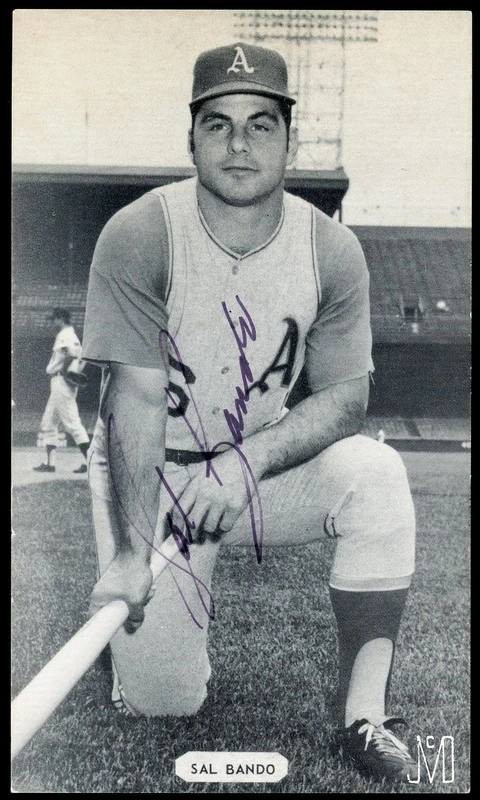
Who Is Sal Bando and Why Does His Wealth Story Matter?
Sal Bando is one of the most decorated third basemen in Oakland A's history. Born in Cleveland in 1944, he was a cornerstone of the Oakland dynasty that won three consecutive World Series titles from 1972 to 1974. He was a four-time All-Star, a gifted fielder, and the kind of consistent run-producer who made the A's offense go. His career WAR numbers, which ESPN's player page pulls directly from Baseball-Reference, place him firmly in the upper tier of third basemen from his era. ESPN’s Sal Bando stats page also provides career batting line details, such as his career totals for home runs and batting average blank" rel="noopener noreferrer">ESPN's player page pulls directly from Baseball-Reference.
His wealth story matters because it sits at an interesting intersection of eras. Bando played during the transition from the reserve clause to free agency, which means his peak playing years came before the salary explosion that followed the Messersmith-McNally arbitration ruling of 1975. He was good enough to have been worth tens of millions in a modern free-agent market, but he actually earned a fraction of that. Then, after retiring from playing, he transitioned into a front-office career that added another meaningful income chapter. Understanding both phases is essential to getting the net worth estimate right.
How Net Worth Is Actually Calculated (And What Gets Left Out)

Net worth has a simple definition: everything you own minus everything you owe. Assets include things like cash, investments, real estate equity, business stakes, and retirement accounts. Liabilities include mortgages, loans, and any other outstanding debts. The math is straightforward; the hard part is getting accurate numbers for a private individual like Bando.
For public figures who aren't filing SEC disclosures or publishing financial statements, estimators like us work from a combination of publicly available data points: reported contract values, known business roles, property records where available, and comparable wealth benchmarks from peers in similar careers. Forbes uses this approach for its wealthiest lists, incorporating everything from real estate to private company stakes as of a specific date. For someone like Bando, the methodology is necessarily simpler because the data is thinner, but the framework is the same.
What typically gets excluded from these estimates, or at least estimated with wide uncertainty, includes: private investment portfolios (no public record), retirement and pension accounts (protected from public disclosure), the true market value of any real estate (assessments lag market prices), and the exact tax burden on past income. The SEC's guidance on accredited investor net worth even flags the complexity of how primary residence mortgage debt should be treated, which illustrates how nuanced a real balance sheet can get. For Bando, we don't have access to any of those personal documents, so the estimate is triangulated from the public record.
Career Earnings Breakdown: Contracts, Signing Bonus, and the Free Agency Moment
Bando's professional baseball earnings story starts in 1965, when he was signed by the Kansas City Athletics with a reported $25,000 signing bonus. That was a meaningful sum at the time but modest by the standards of first-round prospects. He worked his way up through the minors and became a full-time starter with Oakland by the late 1960s.
Through most of his Oakland years, Bando's salary was compressed by the reserve clause, which gave teams complete control over player movement and pay. He filed for arbitration at one point seeking a salary increase to $125,000, which gives us a concrete data point for what he was earning (or demanding) during his prime. That filing illustrates the salary environment of the era: even the captain of a three-time World Series champion was fighting for six-figure pay.
The big financial moment came after the 1976 season, when Bando became a free agent and signed a five-year contract worth $1.5 million with the Milwaukee Brewers. That deal, worth $300,000 per year on average, was a significant salary leap for the era and represented the early power of free agency for players. It also means his total MLB playing earnings, spanning roughly 1966 through 1981, were likely in the range of $2 million to $3 million when you sum the Oakland years at pre-free-agency rates plus the Brewers contract. In inflation-adjusted 2026 dollars, that's considerably more, but the nominal figure is what flows through into actual accumulated wealth.
After the Playing Career: Front Office, Executive Role, and Other Income

Bando's post-playing career is where the wealth story gets more interesting and more opaque. He didn't fade into retirement after his playing days. He transitioned into the Brewers organization, first serving as a special assistant before being elevated to general manager in October 1991. He held that GM role until August 1999, nearly eight years as one of the most powerful executives in the organization.
MLB general manager salaries in the 1990s weren't publicly reported the way player contracts were, but they were substantial. Mid-market GMs during that period typically earned anywhere from $500,000 to over $1 million annually depending on market size and team performance. If we conservatively estimate Bando averaged $600,000 to $800,000 per year across his GM tenure, that's roughly $5 million to $6.5 million in executive compensation alone over those eight years, before factoring in his earlier special assistant salary. This is the single biggest income multiplier in his post-playing financial picture.
There's no strong public record of major endorsement deals or media income tied to Bando, which is typical for players from his era. Unlike modern athletes who maintain active brand relationships well into retirement, Bando's public profile after his GM career was relatively quiet. He made appearances at A's alumni events and baseball commemorations, but these don't represent major income streams by any measurable standard.
Assets, Liabilities, and the Variables That Shape the Final Number
When thinking about what Bando actually holds as wealth today, real estate is the most likely significant asset beyond any investment portfolio. Players and executives from his era who managed their earnings well typically invested in residential or commercial real estate in their home markets. Bando is associated with the Milwaukee and Arizona areas based on his career geography, though public property records don't reveal a complete picture.
On the liabilities side, the key unknowns are standard for any individual in his position: mortgage balances if he carries them, any business obligations, and the cumulative tax burden on his executive income. High earners in the 1990s faced federal marginal rates that peaked at 39.6%, which meaningfully reduces the after-tax accumulation from any six-figure or seven-figure annual salary. The IRS's net worth method for examining taxpayer income actually works backward from this same logic, using changes in net worth to infer taxable income, which underscores why taxes are a real variable in any wealth estimate.
MLB players from Bando's era also have access to the MLB pension, which provides meaningful retirement income but isn't typically counted in a standard net worth figure because it's a stream of income rather than a liquid asset. Players who were active before 1980 with sufficient service time qualify for substantial monthly pension benefits, which would supplement any investment portfolio Bando holds.
Putting the Estimate Together: The $8M–$12M Range Explained
| Income / Asset Category | Estimated Range | Notes |
|---|
| MLB playing career earnings (1966–1981) | $2M–$3M nominal | Pre-free agency compression + Brewers free agent deal |
| Brewers executive compensation (1991–1999) | $5M–$6.5M | Conservative estimate for mid-market MLB GM salary |
| Signing bonus and early career income | ~$25K–$100K | 1965 bonus plus minor/early MLB years |
| Investments and real estate (estimated) | $1M–$3M | Highly uncertain; depends on savings and appreciation |
| Liabilities and taxes (deducted) | ($1M–$2M) | Estimated tax burden and any outstanding obligations |
| Total estimated net worth | $8M–$12M | Midpoint ~$10M as of April 2026 |
BaseballBiographies.com places Bando's total estimated career earnings around $8 million, factoring in both baseball earnings and post-playing income. That figure aligns reasonably with the floor of our range, though it likely represents gross earnings rather than net accumulated wealth after taxes and spending. Our $10 million midpoint adds modest appreciation from savings and investment over several decades, which is a reasonable assumption for someone who worked in professional baseball management through his 50s.
Why Different Websites Report Different Numbers

If you've searched around before landing here, you've probably noticed that net worth sites don't agree. Sites like CelebsMoney and NetWorthList.org each maintain their own Sal Bando entries, and the figures sometimes diverge significantly. There are a few specific reasons for this.
- Many sites copy or interpolate from each other without independent research, so one bad original estimate propagates across dozens of pages.
- Some sites use ad-revenue or social media engagement formulas designed for active content creators, which are basically useless for a retired baseball executive with no YouTube channel.
- Few sites clearly distinguish between gross career earnings and actual net worth after taxes, spending, and liabilities.
- Sites rarely update figures when new information becomes available, so a number from 2015 gets recycled as if it reflects current wealth.
- None of these sites (including ours) have access to Bando's actual financial records, so all figures are estimates built from different assumptions.
The best way to judge the accuracy of any net worth claim is to ask: does the site show its work? Does it explain what income sources it counted, what tax assumptions it made, and what data points anchor the estimate? A number without methodology is just a guess dressed up as a fact. This is worth keeping in mind when you encounter wildly different figures across the web, whether for Bando or for anyone else. You can see similar methodology questions arise when looking at figures like BloodPop's net worth, where income streams from production credits and royalties require the same kind of transparent breakdown to be credible.
How This Estimate Could Change Over Time
Net worth estimates for private individuals are living numbers, not fixed facts. Bando's estimate could shift meaningfully in either direction depending on a few variables. On the upside, real estate appreciation in markets where he holds property could push the number higher. Any publicly disclosed business involvement or licensing deals tied to his baseball legacy would also add to the picture. The A's dynasty of the early 1970s continues to generate nostalgia-driven content, memorabilia demand, and documentary interest, all of which create modest but real income opportunities for players from that era.
On the downside, health-related expenses in later life can draw down wealth significantly, particularly for former athletes managing the long-term physical costs of professional sports. Estate planning decisions, charitable giving, and family financial support are all factors that reduce a liquid net worth figure without necessarily reflecting a loss in quality of life.
It's also worth noting that Bando passed away in January 2023 after a battle with cancer, which means his estate is now what matters financially rather than an ongoing income picture. His wealth at the time of his passing would have been subject to estate taxes, probate (depending on how his estate was structured), and distribution to heirs. This is an important update context: some net worth pages for Bando haven't been updated to reflect his passing, which is another reason to read any celebrity net worth figure with a critical eye. Just as Bando Pop's net worth requires understanding the context of an active versus inactive career to interpret correctly, Bando's figures need to be read with awareness that his wealth is now historical rather than accumulating.
How to Use This Estimate Responsibly
The $8 million to $12 million range is the most defensible estimate we can build from public information. It's grounded in documented contract values, reasonable executive salary benchmarks, and standard financial assumptions rather than copied from another aggregator site. But it is still an estimate, and you should treat it as such.
For researchers or journalists, this figure should be footnoted as estimated, not verified. For fans doing a quick lookup, it puts Bando in appropriate context: a comfortably wealthy former athlete and executive who earned his money across two distinct career phases, not a billionaire, not a cautionary tale. His wealth reflects the salary environment of his playing era, the value of front-office work, and the financial habits of someone who spent decades inside a professional sports organization. Comparable career arc questions come up in very different fields, too. For instance, Baky Popile's net worth involves the same challenge of tracing wealth across multiple professional chapters, where no single income period tells the full story.
If you're trying to compare Bando's wealth to other figures in baseball history or entertainment, the methodology question matters more than the headline number. Wealth estimates built on transparent assumptions, even imperfect ones, are more useful than precise-looking figures with no explanation behind them. That's true whether you're evaluating an MLB legend or trying to understand something like BM Pop the Balloon's net worth, where the income streams are completely different but the estimation challenges are structurally similar.