
Bud Yorkin's net worth at the time of his death in August 2015 is credibly estimated in the range of $50 million to $80 million, with the lower bound anchored by hard public evidence (a $19.5 million real estate sale alone) and the upper bound informed by the scale of the deals he participated in throughout a five-decade Hollywood career. No estate filing or court record has been made fully public, so any number you see online, including on this site, is an informed estimate, not a certified accounting. What follows is the most transparent, evidence-based reconstruction I can build from available public records.
Bud Yorkin Net Worth: Estimate, Income Sources, Timeline

Marcus Holloway
10 Apr 2026
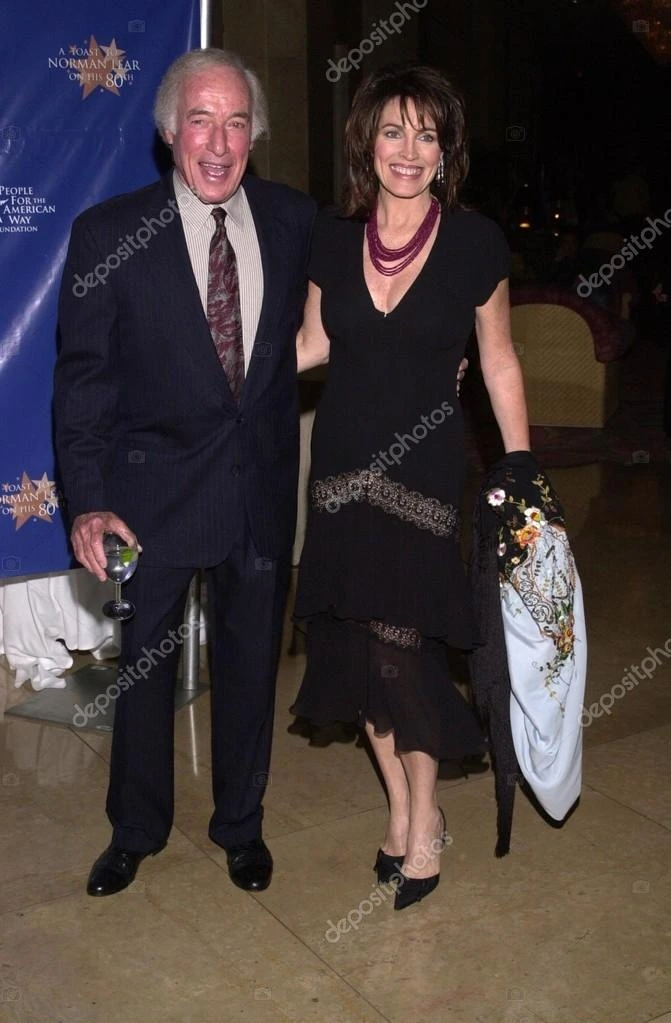
Who Bud Yorkin was and why his career matters financially
Bud Yorkin, born Alan David Yorkin on February 22, 1926, was a television and film producer, director, and writer whose career spanned from the early days of live television in the 1950s all the way to feature films in the 1980s and beyond. He died on August 18, 2015. The Television Academy, which inducted him into its Hall of Fame in 2002, describes him as one of the founding forces of American television comedy, and that description is not hyperbole. His most consequential professional move was co-founding Tandem Productions in 1958 with Norman Lear, a business partnership that would eventually produce some of the most culturally significant and commercially lucrative sitcoms in American TV history, including All in the Family and Sanford and Son.
Why does that matter for a net worth discussion? Because Yorkin was not just an employee collecting a salary. He was an equity partner in a production company that grew into one of the most valuable entertainment assets of its era. Equity in a production company, especially one holding rights to catalog titles, compounds in a way that a paycheck never can. Understanding that distinction is the foundation for understanding where his wealth came from.
The net worth estimate and how we get there
Estimating a deceased person's net worth is a different exercise from estimating a living celebrity's. There is no ongoing income to project, and the estate value at death is what actually matters. Based on the publicly available evidence, here is the working range and what drives it.
| Evidence Source | Implied Wealth Floor | Notes |
|---|---|---|
| Beverly Crest estate sale (2013) | $19.5M+ (realized) | Hard transaction; documented by LA Times |
| Tandem Productions buyout (1983) | Significant lump sum, likely $10M–$50M range | Yorkin's interest was bought out by Lear and Perenchio before the 1985 Coca-Cola sale |
| Film rights and residuals (Twice in a Lifetime, TV library) | Supplementary, hard to quantify | LA Times reports Yorkin retained key rights; $3M lawsuit filed over ITC marketing |
| Investment/asset growth (1983–2015) | Compounding on buyout proceeds over 30+ years | Conservative 5–6% annual growth assumption on lump sum from Tandem buyout |
The Tandem buyout is the single most important data point that is not fully public. In 1983, Norman Lear and Jerry Perenchio bought out Yorkin's interest in Tandem Productions. Two years later, in 1985, Lear and Perenchio sold Embassy Communications (the parent entity that included Tandem) to Columbia Pictures/Coca-Cola for $485 million. Yorkin was already out by that point, which means he did not participate directly in the full $485 million exit.
However, a buyout of a partner's stake in a production company of Tandem's scale in 1983 would have represented a very substantial sum, plausibly in the tens of millions of dollars. Without a public court or SEC record specifying the buyout figure, any number is an estimate, and I want to be clear about that.
Working forward from a conservative buyout estimate of $15 million to $40 million in 1983, invested and grown over roughly 30 years at a modest return, lands you in a range that is consistent with the $50 million to $80 million overall estimate. The Beverly Crest home sale alone in 2013 at $19.5 million confirms he was holding significant assets well into his later years. That single transaction rules out net worth estimates below $20 million as implausible.
Where the money actually came from: income streams across the career
Live television directing (1950s)

Yorkin began his career directing live television, a demanding and well-compensated role in an era when broadcast TV was new and talent was scarce. The Television Academy documents his early career as a director of variety and comedy programming. This period was salary-based income, not equity, but it established his relationships and reputation, which eventually led to the Tandem partnership.
Tandem Productions equity (1958–1983)
This is the core wealth-building engine. Tandem Productions, co-founded by Yorkin and Norman Lear in 1958, produced All in the Family, Sanford and Son, and a string of other commercially successful sitcoms. As a founding equity partner, Yorkin participated in the profits of a company that was, by the early 1980s, among the most valuable independent production entities in Hollywood. The IMDb trivia record notes that Yorkin used his share of Tandem as collateral when financing Twice in a Lifetime, which is telling: his Tandem stake was large enough and credible enough to serve as hard collateral for a feature film budget. The 1983 buyout of his interest by Lear and Perenchio converted that equity into a cash event.
Film production and rights ownership (1980s–1990s)

After the Tandem buyout, Yorkin shifted focus toward feature films. His most notable post-Tandem project was Twice in a Lifetime (1985), a drama he both directed and produced. Crucially, Yorkin did not just collect a fee on this film: he structured the deal to retain control of rights. LA Times reporting confirms he pre-sold television rights to NBC as part of the financing structure, which is a sophisticated rights-monetization approach that goes beyond a simple producing credit. He later filed a $3 million lawsuit against ITC Entertainment alleging they failed to properly market the TV rights, which further demonstrates active rights management and the financial stakes involved.
Residuals and catalog income
As executive producer and director on landmark sitcoms including All in the Family and Sanford and Son, Yorkin would have been entitled to residual payments tied to syndication, home video, and later streaming licensing of those properties. While individual residual payments are not publicly disclosed, the syndication value of those two shows alone is substantial. This stream would have continued well into the 2000s and possibly beyond, representing a relatively passive income layer on top of his primary assets.
Assets, lifestyle signals, and major financial moves
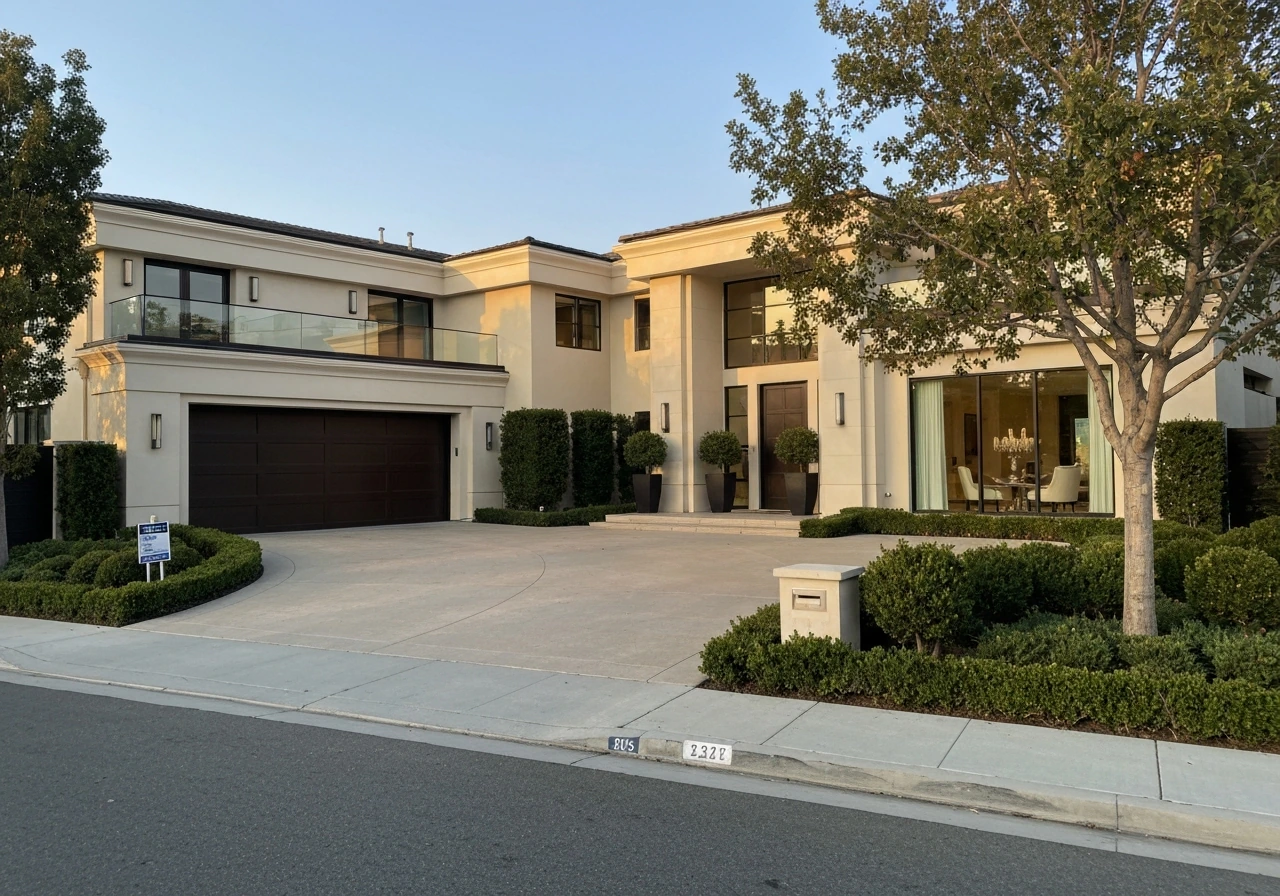
The most concrete public evidence of Yorkin's asset base is the 2013 Beverly Crest estate sale. Bud Yorkin and his wife Cynthia Sikes sold their Beverly Crest home for $19. Bud Yorkin and his wife Cynthia Sikes sold their Beverly Crest home for $19.5 million, according to the Los Angeles Times (published Feb. 26, 2013). 5 million. The property was approximately 10,528 square feet, sat on about two acres, and was originally built in 1938. Selling a primary residence at that price point in 2013, two years before his death, tells you several things: he was holding premium real estate even in his late 80s, and the estate was large enough that this was likely not his only asset.
His first wife, Peg Yorkin, was the subject of a 1991 Los Angeles Times profile headlined around her status as a '$10-million woman,' a characterization tied to her activism and financial independence following their marriage. That reporting, while focused on Peg rather than Bud, provides a contemporary journalism snapshot confirming the Yorkin household was associated with significant wealth by the early 1990s, before the major real estate transactions of his later years.
Beyond real estate, the IMDb collateral detail suggests Yorkin managed his assets actively. Using an equity stake as deal collateral is not passive wealth management. It indicates he was leveraging assets strategically to fund new projects, which is the behavior of someone with a sophisticated financial picture, not just a celebrity with a savings account.
Career timeline tied to wealth growth
- 1950s: Yorkin enters live television as a director, building industry credibility and earning director-level salaries in a booming broadcast market. Wealth at this stage: professional income, no major equity.
- 1958: Tandem Productions co-founded with Norman Lear. This is the inflection point. Equity in a production company converts future success into compounding ownership value.
- 1971–1979: All in the Family premieres in 1971; Sanford and Son follows in 1972. Both become massive hits. Tandem's valuation climbs steadily through the 1970s as these shows dominate ratings and syndication deals build up.
- 1983: Lear and Perenchio buy out Yorkin's interest in Tandem Productions. This is almost certainly the largest single wealth event of Yorkin's career, converting decades of equity into cash.
- 1985: Twice in a Lifetime released. Yorkin structures the deal himself, retaining rights and pre-selling TV rights to NBC, demonstrating ongoing sophistication in rights monetization post-Tandem.
- 1985 (separate): Columbia Pictures/Coca-Cola purchases Embassy Communications, including Tandem, for $485 million. Yorkin is already out but the transaction validates the scale of what he sold his stake from.
- 1991: Contemporary journalism places the Yorkin household in the category of significant wealth (Peg Yorkin's '$10-million woman' profile).
- 2013: Beverly Crest estate sold for $19.5 million, confirming substantial real asset holdings within two years of his death.
- August 18, 2015: Bud Yorkin dies. Estate value at death is the terminal wealth figure; no public probate record has been widely reported.
How Yorkin compares to peers in the same era

To put Yorkin's estimated $50 million to $80 million in context, it helps to look at the broader landscape of 1970s TV production wealth. Norman Lear, his longtime partner, is estimated by multiple sources at well over $500 million, but Lear remained in the business much longer, retained more of the Tandem/Embassy enterprise, and participated in the full $485 million Coca-Cola exit.
Yorkin sold his stake earlier, which means he captured a smaller share of the eventual transaction but also derisk his position years in advance. Jerry Perenchio, who partnered with Lear to buy out Yorkin and then execute the 1985 sale, went on to build ATV/Univision into a multi-billion-dollar enterprise, placing him in a different wealth category entirely. Yorkin's range is more consistent with a founding partner who cashed out at the right time rather than swinging for the maximum exit.
It is worth noting that entertainment wealth at Yorkin's level is fundamentally different from celebrity wealth driven by performance fees. Comparing him to, say, B2K's net worth or even looking at how HBK's net worth was built through performance and licensing deals highlights the distinction: Yorkin's wealth was structurally different, rooted in equity ownership and rights control rather than personal performance income. That equity model is why his estate remained large even decades after he stepped back from active production.
Even compared to newer-generation entertainers, the equity-versus-performance gap is striking. Figures like YNW Bortlen or artists whose wealth is tracked primarily through music catalog value and streaming, such as those whose profiles appear in articles like the YBK net worth profile, are building wealth in a fundamentally different structural environment than Yorkin navigated, even if the dollar amounts in some cases overlap.
How to verify this number yourself
Here is exactly how to sanity-check any Bud Yorkin net worth figure you encounter, including this one. First, ignore any site that gives you a single clean number without explaining its inputs. Celebrity net worth aggregators are widely acknowledged, including by Wikipedia's own entry on CelebrityNetWorth, to 'ballpark' figures rather than provide dollar-level accuracy. They are useful as a starting range check, nothing more.
Second, anchor your estimate to the hard public evidence. The Beverly Crest real estate transaction at $19.5 million in 2013 is documented by the Los Angeles Times and is a real, completed transaction. Any credible net worth estimate must be at least consistent with that single data point, meaning it must be above $20 million. If you see an estimate below that, the source has not done basic verification.
Third, work backward from the Tandem Productions deal structure. The $485 million Coca-Cola/Columbia acquisition of Embassy Communications in 1985 is documented by the Los Angeles Times, corroborated by Norman Lear's Wikipedia entry and Columbia Pictures' own history, and is a matter of corporate record. Yorkin's buyout predates that transaction, but the deal size establishes the scale of the asset he was a founding partner in. A buyout of a founding partner's stake in a company sold two years later for $485 million is not a small transaction.
Fourth, cross-reference against the Television Academy's official records and the AFI Catalog for career credits. These are primary-source institutional records that confirm which Bud Yorkin we are discussing and which productions he controlled. This matters because any financial profile is only as credible as its subject identification, and it is worth verifying you are reading about the correct person before accepting any wealth figure.
The honest answer is that without a public probate filing or estate record, the $50 million to $80 million range is the most defensible estimate the available evidence supports. It could be higher if the Tandem buyout was in the upper range of what that equity was worth. It could be modestly lower if debts, charitable giving, or estate planning reduced the headline figure at death. But the evidence floors it well above $20 million, and the career-and-deal profile makes anything above $100 million unlikely given when and how he exited Tandem.
FAQ
Why can’t Bud Yorkin net worth be stated as one exact number?
Because the estate accounting is not fully public, most figures rely on reconstructed inputs (for example, the 1983 Tandem buyout estimate plus asset sales). Without a probate or court accounting showing liabilities, any single “final” number would be speculation rather than a certified snapshot at death.
If the 2013 Beverly Crest sale was $19.5 million, could his net worth still have been below $50 million?
It would be difficult but not impossible. The lower end of $50 million assumes the home sale is only one component of a larger portfolio. If debts, heavy estate settlement costs, or substantial charitable distributions were documented privately, the headline net worth could compress, but the $19.5 million floor still makes very low estimates implausible.
Do residual payments from All in the Family and Sanford and Son materially affect Bud Yorkin net worth?
They likely helped over time, but the size depends on what rights he retained after the Tandem exit. If his buyout included or transferred certain participation interests, later residual streams could be smaller than expected even though syndication value of the shows is large.
How much did the Tandem buyout influence the estimate compared with salaries from earlier TV work?
The equity event is usually the major driver because salary-based income is not likely to produce a late-career net worth tens of millions high by itself. Early TV directing established reputation and relationships, but the big step-change in wealth is tied to cashing out equity in a production company at Tandem’s scale.
What common mistake leads to exaggerated Bud Yorkin net worth numbers online?
Using the total sale price of the parent company as if it applied to his personal proceeds. The Embassy Communications sale for $485 million does not automatically translate into Yorkin receiving the same share, especially because he had already exited by 1983.
What common mistake leads to deflated Bud Yorkin net worth numbers?
Ignoring collateral, rights control, and later asset retention, then treating him like a performer paid only by fees. The article’s logic includes that he used his Tandem stake as collateral for Twice in a Lifetime, which suggests a meaningful equity position rather than modest savings.
Could Bud Yorkin net worth have been higher than $80 million?
Yes, but you would need stronger evidence that the 1983 buyout valuation of his Tandem interest was toward the top end and that he did not materially reduce assets through taxes, litigation costs, or major philanthropy. Without a public buyout figure or estate filing, the current ceiling is an inference, not a hard cap.
Could it have been lower than $50 million at death?
Possibly, if liabilities at death were unusually high or if the net proceeds from the Tandem buyout were reduced by debt, agreements with partners, or earlier transactions. The range already incorporates a plausible conservative buyout-to-growth path, but private obligations could still pull the final number down.
Why does rights monetization matter for estimating net worth rather than credits alone?
A producing credit does not guarantee the same financial exposure. When a producer retains or pre-sells specific rights (like TV rights tied to financing), it can change both cash timing and lifetime value. That affects how much of the wealth comes from equity conversion versus ongoing licensing.
What’s the fastest way to sanity-check any Bud Yorkin net worth claim you see?
Check whether the estimate clears the $19.5 million Beverly Crest transaction floor and whether it explains its connection to the 1983 buyout rather than assuming the later $485 million parent sale went to Yorkin. If a claim offers a single number with no input logic, treat it as a ballpark at best.
Does the net worth estimate include real estate and personal assets, or only business interests?
Most reconstruction approaches implicitly include both, because net worth at death is asset minus liabilities across everything. This is why later real estate evidence (like the Beverly Crest sale) is used as a validation point, not just a footnote.
Could identifying the wrong person with a similar name change the net worth conclusion?
Yes. The article emphasizes verifying institutional records and career credits to ensure the financial profile is for Bud Yorkin (Alan David Yorkin) and not a similarly named individual. Misidentification can lead to mixing unrelated assets and producing nonsensical net worth estimates.
Next Articles

YNW Bortlen Net Worth Estimate: How It’s Calculated
Estimate YNW Bortlen net worth range with transparent method using music, touring, deals, and public records inputs

B2K Net Worth: How Estimates Are Built for the Band
B2K net worth explained: how group and member wealth estimates are calculated from income, touring, royalties, and verif

BNI Net Worth: How to Identify the Right BNI and Estimate
BNI net worth guide: identify the right BNI, verify identity, and estimate total wealth with sources and sanity checks