
When people search 'BNF net worth,' they are almost always looking for blank" rel="noopener noreferrer">Takashi Kotegawa, the legendary Japanese day trader known online as BNF (short for 'Buy and Forget,' referencing his patient, conviction-driven trading style). Kotegawa is best known as the 'J-Com Man,' the trader who made roughly 2 billion yen (around $20 million at the time) in a single day in 2005 by buying shares that a Mizuho Securities broker accidentally sold far below market price. His estimated net worth sits in the range of $150 million to $200 million USD, built almost entirely from proprietary trading, not endorsements, business ventures, or media deals.
BNF Net Worth: How to Verify the Right Person and Estimate

Marcus Holloway
9 Jun 2026

Who 'BNF' actually is, and how to confirm you're in the right place

Takashi Kotegawa is a rare figure in the investing world: a self-made, intensely private Japanese trader who turned roughly 1.6 million yen (about $13,000 USD) in starting capital into what credible estimates place north of $150 million over roughly a decade of active trading. He operated primarily on the Tokyo Stock Exchange and built his reputation on platforms like 2channel (2ch), Japan's equivalent of Reddit at the time, where traders could follow his moves and commentary.
The tricky part with 'BNF' as a search term is that the acronym is genuinely ambiguous. You'll find 'BNF' attached to company names (like Bnf Lifestyles Private Limited), corporate finance abbreviations in credit rating documents where 'BNF' appears next to phrases like 'tangible net-worth base,' and even occasional confusion with similarly formatted gamer or streamer handles. If your search results are pulling up a business entity, a corporate credit filing, or a gaming personality, you're in the wrong place. The person-level BNF with a genuine wealth story is Kotegawa, full stop.
- Full name: Takashi Kotegawa
- Nationality: Japanese
- Known as: BNF, 'J-Com Man'
- Primary field: Proprietary day trading and swing trading
- Key fame event: The December 2005 J-Com trade on the Tokyo Stock Exchange
- Operating base: Tokyo, Japan (largely private, rarely gives interviews)
BNF net worth basics: what the estimate actually means
A net worth estimate is not a bank balance. It's a calculated approximation of what someone would have left over if you added up all verifiable or reasonably estimated assets and subtracted known or estimated liabilities. For Kotegawa, this is particularly hard to pin down because he's never filed a public wealth disclosure, doesn't run a publicly traded fund, and grants almost no interviews. The estimates you see, roughly $150 million to $200 million USD, are anchored to two documented data points and then extended forward using reasonable assumptions about returns and lifestyle.
The first anchor is the J-Com trade of December 2005, where he reportedly netted around 2 billion yen in profit in a single session. The second anchor is reporting from Japanese financial media in the mid-2000s suggesting his cumulative trading profits had crossed 10 billion yen (approximately $85 to $100 million USD depending on the exchange rate used). Everything after that is informed estimation based on market activity timelines and known behavioral patterns, like the fact that he has discussed reducing his trading frequency as he aged.
How these estimates are actually built
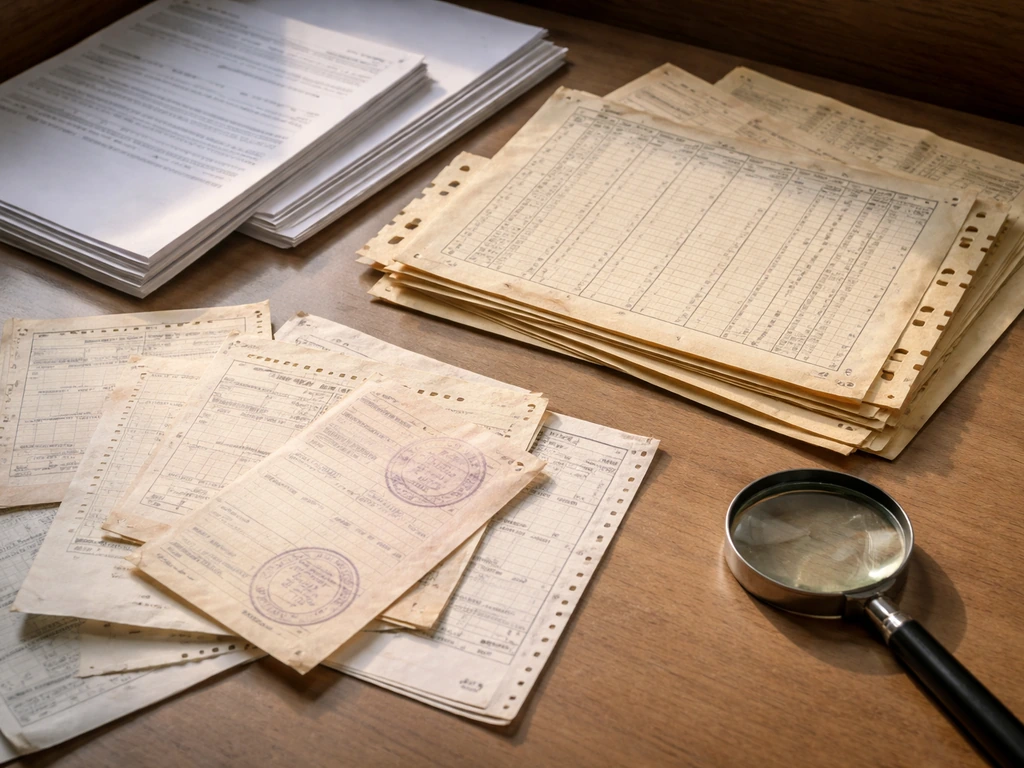
For a figure like BNF, the methodology is more archaeology than accounting. There's no annual report, no SEC filing, no Forbes list entry with a sourced footnote. Here's what goes into a credible estimate for a private trader like Kotegawa:
- Documented career earnings: The J-Com trade profit is the most cited and most verified data point, reported by Japanese financial outlets at the time the event happened and corroborated by Tokyo Stock Exchange records of the erroneous trade.
- Contemporaneous reporting: Japanese financial media and trading community forums documented Kotegawa's cumulative trading performance in the mid-2000s. These figures are historical but serve as a known floor for his wealth.
- Exchange rate adjustments: His wealth was accumulated in Japanese yen. Converting to USD requires using period-appropriate or current exchange rates, which is why estimates fluctuate with currency movements.
- Return assumptions: Knowing his reported starting capital (~1.6 million yen in the late 1990s) and the timeline of his peak trading years, analysts can apply reasonable compounding assumptions to arrive at a range.
- Lifestyle and spending signals: Kotegawa is known for extreme frugality. Multiple accounts describe him living in a modest apartment and spending very little, which suggests his net worth has not been significantly eroded by personal expenditure.
- No publicly known liabilities: There is no reporting of significant debt, legal judgments, or major financial losses after his peak years, which supports estimates at the higher end of the range.
This is meaningfully different from estimating the net worth of, say, a musician or athlete, where you can cross-reference album sales, touring revenue, endorsement deals, and publicly filed business interests. For BNF, the estimate is more conservative and more honest: there's a documented floor, a reasonable ceiling, and a lot of acknowledged uncertainty in between.
How Kotegawa actually built his wealth
Kotegawa started trading Japanese equities from his apartment with minimal capital in the late 1990s, reportedly around age 20. The Japanese equity market at the time was volatile and full of inefficiencies, particularly in small-cap and mid-cap names, which suited his style of high-frequency, high-conviction trading.
The J-Com trade (December 2005)

This is the trade that put Kotegawa on the global map. Mizuho Securities mistakenly entered an order to sell 610,000 shares of J-Com at 1 yen each, when the actual instruction was to sell 1 share at 610,000 yen. Kotegawa moved faster than almost any other market participant to buy the mispriced shares, and when the error was corrected and the price reverted, he reportedly netted approximately 2 billion yen in a single trading session. This wasn't luck in the traditional sense: it required the capital base to act, the technical infrastructure to execute fast, and the market awareness to recognize the error in real time.
Compounding through disciplined trading (1999 to mid-2010s)
Beyond the J-Com event, Kotegawa built wealth through years of consistent profitable trading in Japanese equities. Japanese financial community reporting from around 2006 suggested his cumulative profits had exceeded 10 billion yen. He has spoken in rare public comments about transitioning to longer-term holding periods and reducing trading frequency, which suggests his active wealth-building phase was concentrated in roughly a 10 to 15 year window.
Post-peak capital preservation
There's no credible reporting of major new income streams after his peak trading years. He doesn't run a public fund, has not launched a business, and doesn't monetize his profile through media or endorsements. This means his wealth since the mid-2010s is largely a function of how well his existing capital has been invested or preserved, not new income generation.
Assets and liabilities: what sits behind the number
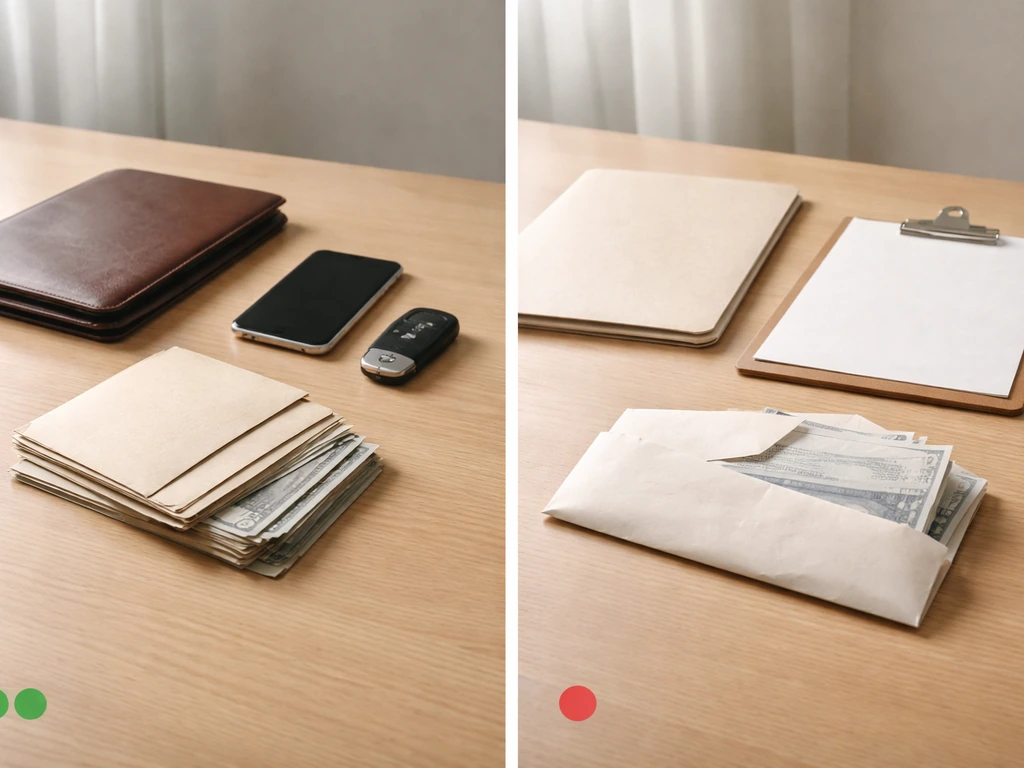
| Category | What's likely included | Confidence level |
|---|---|---|
| Trading account capital | Core liquid holdings in Japanese equities and possibly other markets | High (documented floor) |
| Cash and near-cash | High given reported frugality and aversion to leverage | Medium-High |
| Real estate | Possibly minimal; known for modest living, no property holdings reported publicly | Low (unknown) |
| Business equity | No publicly known business stakes or fund ownership | Low (none reported) |
| Foreign investments | Possible but not documented | Low (unknown) |
| Taxes and historical liabilities | Japanese capital gains taxes would have been significant on documented profits | Medium (estimated deduction applied) |
| Personal debt | No reporting of significant liabilities | High confidence in low debt |
The most important caveat here is that Kotegawa's wealth is almost entirely in financial assets, not hard assets like real estate or business equity that can be independently appraised. That makes his net worth more volatile in theory (markets move) but also more liquid and more directly tied to his trading performance over time.
Why different sites publish different numbers
If you've already searched 'BNF net worth' and seen figures ranging from $50 million to $300 million, that's not necessarily because anyone is fabricating numbers. It reflects several real factors that make private trader wealth estimates genuinely difficult.
- Exchange rate timing: All of Kotegawa's documented profits were in Japanese yen. Converting the same yen figure at different points in USD/JPY history produces very different dollar amounts.
- Starting point assumptions: Some estimates anchor only to the J-Com trade and undercount prior accumulation. Others extrapolate aggressively from a 10 billion yen floor figure and assume strong returns since then.
- Unknown post-2010 performance: There's no public record of his trading results after his peak media coverage. Optimistic estimates assume continued compounding; conservative ones assume flat or modest returns.
- No official disclosure: Unlike athletes with public contracts or musicians with reported deal sizes, Kotegawa has never confirmed or denied any wealth figure publicly.
- Methodology differences: Sites that apply higher assumed return rates, ignore tax impacts, or fail to convert currencies correctly will produce dramatically different outputs from the same underlying data.
The honest takeaway is that $150 million to $200 million USD is a reasonable midpoint estimate given documented earnings floors, known tax obligations, minimal lifestyle spend, and no reported losses. Anything above $250 million requires aggressive return assumptions that aren't directly supported by available data. Anything below $100 million ignores the documented profit record.
How to check for updates and evaluate any source you find
Because Kotegawa is private and rarely appears in media, net worth updates for BNF are infrequent. Most credible estimates are refreshed only when the USD/JPY exchange rate shifts significantly, when a rare interview or comment surfaces, or when broader financial press revisits the J-Com story (often on anniversaries or during market volatility discussions). Here's how to read any source critically:
- Check the publication date: An estimate from 2019 is not the same as one from 2025, especially given JPY/USD fluctuations over that period.
- Look for the methodology: Does the site explain how they arrived at the number, or just state it? Sites that show their work (documented earnings, exchange rate used, tax adjustment) are far more credible than those that cite a round number without context.
- Verify the anchor data: The J-Com trade profit and the reported 10 billion yen cumulative figure are the two legitimate anchors. If a site's estimate doesn't reference these, it's likely fabricated or copied from another fabricated source.
- Discount outliers in both directions: A $500 million figure is not supported by any documented data. Neither is a $20 million figure that only counts the J-Com day trade and ignores a decade of prior trading profits.
- Cross-reference Japanese financial media: For Kotegawa specifically, original reporting in Japanese financial outlets (even translated) is more reliable than English-language celebrity net worth aggregator sites.
For the most current estimate on this site, navigate directly to the BNF profile page, where the figure is reviewed periodically against USD/JPY rates and any new credible reporting. If you're comparing figures across public figures in the trading and finance space, profiles for other handle-known figures like NBK and FBK can offer useful context for how private or semi-public financial personalities are profiled, though their wealth drivers and career structures differ significantly from Kotegawa's pure-trading background.
If you are specifically trying to gauge fbk net worth, treat any figure you see as an estimate and confirm what sources it is based on. If you’re also searching for nbk net worth, the same caution applies: most figures are unsourced and depend on assumptions about capital and trading or business income.
The bottom line is this: BNF is Takashi Kotegawa, his wealth is real and documented to a floor level, and the most defensible current estimate is in the $150 to $200 million USD range. Any number you see outside that band deserves a harder look at how it was calculated. If you're trying to verify the helpbnk net worth figures you see online, focus on sourced anchors like documented earnings rather than unspecific claims.
FAQ
How can I confirm I’m looking at Takashi Kotegawa (BNF) and not a company or unrelated “BNF” abbreviation?
Start by checking whether the page mentions the 2005 J-Com mispricing incident or Japanese day-trader context. If the results reference corporate filings, credit rating language like “net-worth base,” or corporate products, treat it as a different “BNF.” Also verify the character set or spelling used in the source, since “BNF” and similar handles can be unrelated.
Why do some sites show BNF net worth anywhere from $50 million to $300 million?
Most discrepancies come from different assumptions about reinvestment rate after the peak years, whether trading profits were offset by losses or taxes, and how much capital was preserved versus spent. With no public disclosures, even credible estimates use modeling, so small changes in assumptions can move the total by tens of millions.
What’s the most common mistake when estimating net worth for a private trader like BNF?
Assuming net worth equals “peak profit” or “lifetime returns” without accounting for liabilities and the possibility of interim drawdowns. A correct estimate should convert historical profits into estimated current holdings, then subtract taxes and plausible living and operational expenses, even if exact numbers are unknown.
How do taxes and trading costs affect the BNF net worth range?
Taxes and trading expenses reduce what can be retained, so estimates that ignore them often overshoot. A more conservative model assumes a meaningful tax drag on realized gains and includes ongoing costs (commissions, fees, and market impact). If a source doesn’t explain a tax treatment, treat high figures with caution.
Is it reasonable to treat BNF net worth as mostly liquid assets, and how does that change interpretation?
Yes, given the article’s premise that his wealth is primarily financial, not independently appraisable hard assets. That means his net worth can be more sensitive to market moves and currency effects (JPY to USD), so “updates” may reflect exchange-rate changes as much as performance.
Why might BNF net worth estimates change even if nothing new is reported?
Currency swings and general market repricing can shift USD-denominated valuations, even when holdings do not change. Also, some estimates are refreshed on anniversaries of key events or when authors revisit old reporting, leading to periodic recalculations rather than true wealth changes.
What would qualify as a “real” new data point versus rumor for BNF net worth?
A real update usually comes from primary or near-primary evidence, such as verifiable interviews, direct quotes, or newly surfaced archived reporting that includes concrete numbers. Pure speculation like “sources say he’s worth X” without any anchor event, timeline, or explanation of how the estimate was computed is less reliable.
How can I sanity-check a BNF net worth figure without knowing the author’s methodology?
Compare the implied retained capital to the documented profit anchors described in the article. If a number requires extremely high ongoing returns far beyond what’s supported, or if it assumes new income streams that contradict the known lack of media/business activity, treat it as an overreach.
Does BNF’s reduced trading frequency (as described) mean his net worth would stop growing?
Not necessarily. Reduced trading can still coincide with growth if retained capital is managed effectively through longer-term holds or conservative reinvestment. However, the article’s framing suggests the biggest engine was active trading, so after the peak years, growth should generally be slower and more dependent on investment management than frequent new profits.
If I’m trying to value “BNF net worth” for investment or betting decisions, what’s the safer approach?
Use the estimate as a rough credibility check, not as a tradable signal. Since the subject is private and the calculation is model-based, focus on anchored evidence (documented profit floors and timeline) and avoid decisions based on precise numbers that are not independently verifiable.
Next Articles

FBK Net Worth: How to Verify the Right Person and Estimate
Verify the right FBK and estimate net worth with a defensible wealth range, asset and income breakdown, and sanity check

NBK Net Worth 2026 Estimate: Who NBK Is and How Much
As of 2026, estimate NBK net worth with sources, income breakdown, earnings timeline, and a verification checklist.

HelpBNK net worth: how to identify the right target
Clarifies what helpbnk net worth refers to, how estimates work, why results differ, and steps to verify the right target